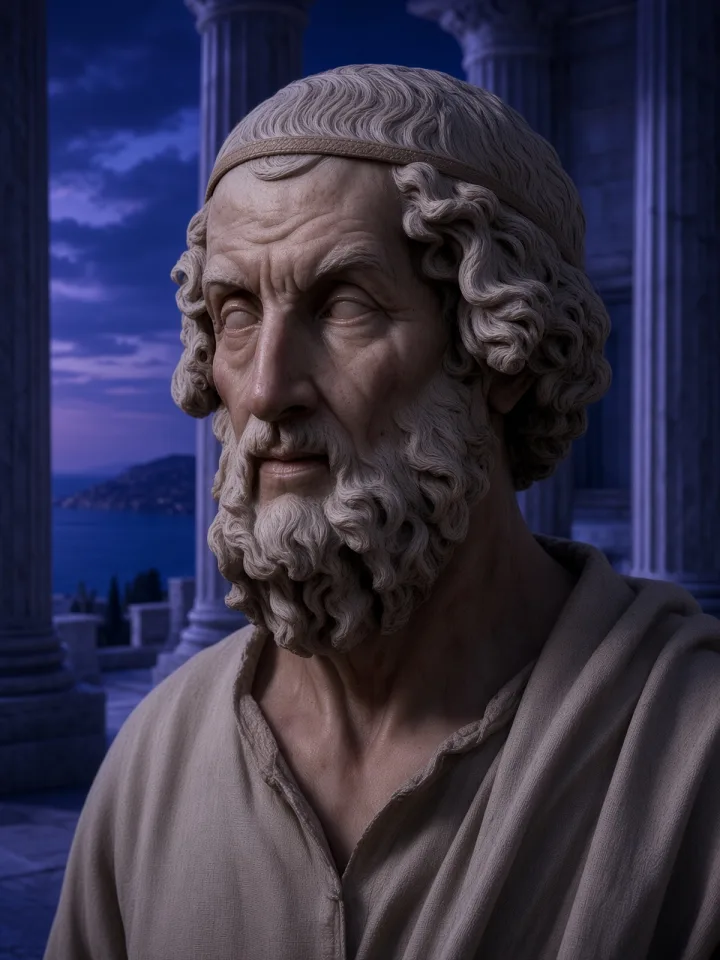
Homer
The Poet · Singer of the Odyssey · Blind Bard of the Tradition
He does not sit among the suitors or stand at the hearth. He sings to those who hear the tale, and names what the hall cannot see: the true face of the goddess, the long occupation of the house, and the empty seat that still belongs to the man of many turns. Calliope is the Muse who gives the song; Homer is the voice that carries it. Outside the scene. Always with the audience. Blind-bard tradition. Butler remains utility; Homer is the poetic frame.
Audience vs the hall
The hall: No bard named Homer stands in the hall. Suitors, servants, and the prince hear a song in the air of the house — not a man at the hearth they can name.
The audience: Homer names Athena in her true form, the long occupation of the house, and the empty seat of the man of many turns. The hall does not share that privileged sight.
Related Calliope · Athena · Telemachus · Odysseus
- MetisHigh — the poet’s knowing
- VoiceDefining
Tell me, O muse, of that ingenious hero who travelled far and wide after he had sacked the famous town of Troy.
Book I Weave Pending coherent set — see policy
Narrative-first · not a combat sheet · guest-open